
How Do Car Insurance Claims Work?
If you’ve been in a car accident involving another vehicle, individual or property, you will want to know how the car insurance claim process works in Australia.
Our legal guide covers everything you need to know about motor vehicle accident claims, including your right to claim financial damages for a personal injury.
Free General Advice for Car Accident Injuries
If you have been injured in a traffic accident, you may be eligible to claim compensation from the CTP insurance policy of the at-fault driver. Even if you helped cause the collision, you could still have a valid claim.
Our motor vehicle accident lawyers provide free professional advice that explains your rights and entitlements. All our legal services are funded on a 100% no-win, no-fee basis. Pay for a win and zero if you lose. It’s free to know further details. Call 1800 700 125
Top Takeaways
- A car insurance claim is an official application to an insurance provider seeking compensation or property damage repairs for an insured event covered by an insurance policy.
- Lodging a claim starts the assessment process, which ends with either a rejected claim, a financial payout, or an approved replacement vehicle at the agreed or market value.
- It is illegal to drive a car on public roads in Australia without Compulsory Third Party (CTP) insurance, and penalties for driving without it can include fines and loss of license.
Car Insurance Claims Explained
- A car insurance claim is an official application to an insurance provider seeking compensation or property damage repairs for an insured event covered by an insurance policy.
- Lodging a claim starts the assessment process, which ends with either a rejected claim, a financial payout, or an approved replacement vehicle at the agreed or market value.
- Approximately 1 in 7 Australian car insurance policyholders lodge a claim each year, with an average cost exceeding $5,200, according to the Insurance Council of Australia.

Common Types of Car Insurance Claims
There are four main types of motor vehicle insurance in Australia: Compulsory Third Party (CTP), Third Party Property Damage, Third Party Fire and Theft, and Comprehensive Car Insurance.
Here is what each type of car insurance covers.
Compulsory Third Party (CTP) insurance
- In Australia, third-party (CTP) insurance is compulsory. Every motor vehicle registration includes this type of insurance policy.
- It is illegal to drive a car on public roads in Australia without Compulsory Third Party (CTP) insurance, and penalties for driving without it can include fines and loss of license.
- CTP insurance covers injuries to other drivers or road users that are caused by your vehicle. However, it does not cover property damage to your own car, although some insurers offer extra cover.
- CTP insurance does not cover damage to other vehicles or property; it only covers personal injury claims made by individuals involved in an accident where the insured driver is at fault.
- CTP insurance is mandatory, but you can also buy additional insurance, such as third-party property damage insurance or comprehensive cover (explained in the following sections)
If the vehicle responsible for the collision is uninsured, unknown, or unregistered (has no CTP insurance), you could make a claim with the QLD Nominal Defendant. This statutory body takes the place of a CTP insurance policy.
Third Party Property Damage Insurance
When you are in an accident involving other vehicles, third-party property damage insurance covers:
- Damage to other cars and property
- But does not cover damage to your own vehicle
Theft, Fire and Third-Party Insurance
Third-Party Fire and Theft (TPFT) insurance is a middle option between CTP insurance and comprehensive car insurance. If you own an inexpensive car with a lower repair or replacement cost, theft and third–party cover, or third-party property damage cover may be ideal for you.
This type of policy can be added to third-party property cover and adds protection for:
- Damage that you cause to other drivers and road users
- Can also cover theft, attempted theft or fire of your own car
- This policy can also cover damage to other cars and other drivers
They often also cover damage that is caused by uninsured drivers. Hence, it provides a higher level of financial protection than third-party property insurance but also costs less than comprehensive cover.
Comprehensive Car Insurance
Comprehensive car insurance is the highest level of cover available for car owners in Australia and includes:
- Damage to your own car as well as damage to other vehicles and property, regardless of who is at fault.
- Can also cover theft, fire, vandalism, and other weather events, such as hailstorms and floods, that are common in some parts of Australia.
- Comprehensive policies can also include roadside assistance services, windscreen cover or rental car cover.
- Many insurers also offer online discounts if you buy or renew a policy online, which can help decrease the overall cost of auto insurance.
- Comprehensive insurance is particularly good if you own a new car or an electric vehicle. That’s because it typically covers the full replacement cost or the pricey specialist repairs needed when an electric car is damaged.
- Transfer fees and gap payments (covering the difference between the sum insured and the amount owing on a car loan if the vehicle is written off) may also be covered by policies.
- You may be eligible for a claim bonus under a comprehensive policy, although these may be subject to minimum premium requirements.
How to Make a Claim Against Car Insurance Australia
The car insurance claim process in Australia is regulated by the General Insurance Code of Practice, ensuring insurers act fairly and meet specific response timeframes.
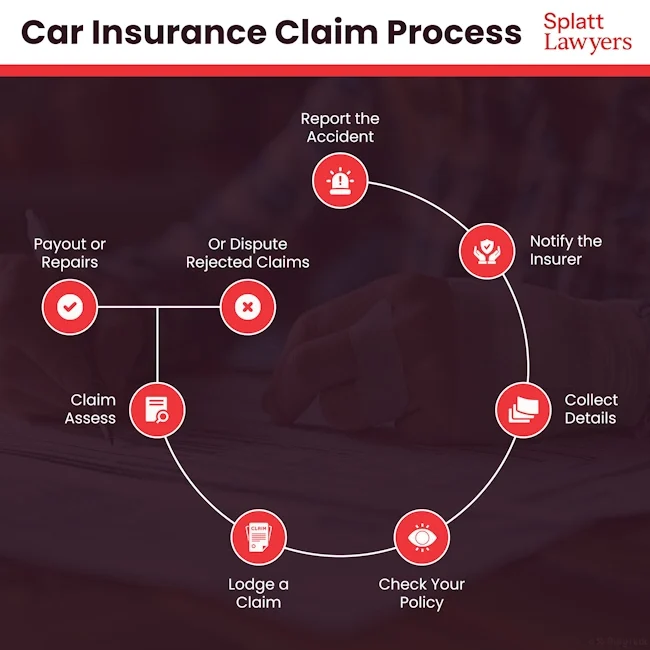
The steps of the car insurance claim process in Australia are as follows:
- Report the accident and notify the insurer
- Collect details about the accident
- Review your insurance policy to check what you can claim
- Do you need to pay an excess?
- Make a claim online with the liable insurance company
- Claim assessment
- Payout or denied claim
1. Report the acident and notify the insurer
The first step after a car accident in Australia is to report the crash to the police. In most states, you must lodge a report within 24 to 48 hours if someone has been injured or a vehicle needs to be towed (has substantial property damage).
- Most insurance policies also have strict time limits for reporting the collision to the insurance company.
- Insurance policies often have strict time limits for notifying the insurer after an accident.
- Compulsory Third Party (CTP) injury claims in Australia have strict state-based time limits, some as short as 28 days to receive full back pay.
2. Collect details about the accident
In Australia, you are legally required to exchange names, addresses, and vehicle registration numbers with other drivers involved in a car accident. You will need the contact details of everyone involved in the crash as well as their
- Insurance information
- Colour, make and model of their vehicle
- Police report number (if there is one)
- Details of the towing company
- It is advisable to gather comprehensive evidence after a car accident, including photos of all vehicle damage and the scene, as well as details of any witnesses.
- Taking wide-angle photos of the entire accident scene and close-ups of vehicle damage is vital evidence for insurance claims.
3. Review your insurance policy to check what you can claim
The next step is to read your car insurance policy to determine your level of cover. Different types of car insurance offer various levels of protection, for example:
- Third-party property damage insurance only covers damage to someone else’s vehicle and property
- Comprehensive car insurance policies can pay for damage to your own vehicle as well as other vehicles
4. Do you need to pay an excess?
- In most cases, you will need to pay an excess when lodging a car insurance claim.
- The type of car insurance policy and level of cover will determine if you owe an excess amount for repairs.
5. Make a claim online with the liable insurance company
The documents you will need to make a car insurance claim include a completed claim form and accident details with supporting evidence like photographs and police reports.
- You can lodge a claim online, through a mobile app or over the phone with many insurers.
- You should complete this step a.s.a.p., as time limits apply and you may be able to access a hire car.
- The claims team may also make a request for more information if something is missing
- It is important to document every conversation with your insurer after filing a claim, including the date, time, and names of representatives.
6. Claim Assessment
Next, the insurer will begin assessing the claim. During this process, they will investigate who is at fault for the accident.
7. Payout or Denied Claim
An approved claim will result in a payout and/or approved vehicle repairs
- If your claim is rejected, you can escalate to the Australian Financial Complaints Authority (AFCA) for a free, independent review.
- You also have the option of seeking legal advice from a personal injury lawyer.
What is the Car Insurance Claim Assessment Process in Australia?
The General Insurance Code of Practice states that Australian car insurance companies have ten business days to respond after someone makes a claim. This assessment can result in either of these outcomes:
- The insurer accepts or denies a claim within the mandated ten-day period without a request for further information or investigation
- If the claims team needs more information or an investigation, they must notify you of this request, with an estimated time frame to reach a decision. They must also advise if an adjustor or loss assessor is conducting an investigation.
Furthermore:
- The insurer must provide an update on progress every 20 business days
- If you ask for an update, they have ten business days to respond
What happens after a claim is accepted?
There are several possible outcomes after a claim is accepted, depending on the type of car insurance cover and what you are claiming.
- If your vehicle is a write-off, you could get a financial payment or a new replacement vehicle.
- If you lodged an injury compensation claim against a CTP insurance policy, you would receive a financial settlement.
- You could also have your damaged car fixed by an authorised repairer, and the insurer pays the bill.
What can I do if a car insurance claim is rejected?
According to the Financial Rights Legal Centre, if your car insurance claim has been denied, you can contest the insurer’s decision by:
- Asking for a written explanation (they must comply)
- Carefully read your Product Disclosure Statement to confirm what your policy covers
- Then ask for an internal dispute review
If these steps fail to reach a satisfactory resolution, you can lodge a formal complaint with the Australian Financial Complaints Authority (AFCA), which is a free service.
- Decisions by the ombudsman are legally binding. If you have a successful complaint, AFCA can require the insurer to pay out your claim.
- The insurer risks having its actions reported to ASIC (Australian Securities and Investments Commission) if it refuses to comply with this ruling.
Why do car insurance claims get denied by providers?
According to the Financial Rights Legal Centre, here are the common reasons why claims are denied:
- Misrepresentation: providing false, inaccurate, or misleading information
- A policy condition excludes your claim (e.g. using your vehicle as a rideshare)
- Cancelled or invalid policy (e.g. premiums not up-to-date)
- Fraud
- The person driving isn’t included in the policy cover
- Breach of policy terms (broke road rules)
- Property damage doesn’t match the claim
How do insurers assess damage for car insurance claims?
When assessing the extent of car damage, insurers gather all the available evidence, which may include:
- Reports from qualified assessors and independent repairers
- Photo analysis driven by AI to determine repair expenses
- Images, videos, police reports and witness testimony
- They also identify damaged parts
- Decide if a vehicle can be repaired or is a write-off
How long does it typically take to settle a car insurance claim?
According to National Insurance Cover, most car insurance claims settle within:
- 2 to 6 weeks for standard repairs
- A few days for simple cases
- A few months for complex claims (e.g. multiple vehicle accidents)
- Compensation claims for car accident injuries take significantly longer. Often between 12 and 18 months.
- Catastrophic injury claims can take years to settle.
Can I get a hire car through my insurance while my claim is processed?
Most of the time, the insurer will pay for a rental car while your claim is being processed. However, this relies on:
- Your type of car insurance policy
- Who caused the accident
- The extras included in your policy terms
Read your policy’s terms or the Product Disclosure Statement to learn your entitlements for a hire car.
What is the process for making a car insurance claim after a theft?
When your car is stolen, there is a specific way to make a claim with your insurance provider. First, report the crime. Then, notify the insurer.
- There will be an investigation and an attempt at recovery before a settlement.
- These days, theft is usually covered by comprehensive policies and third-party fire-and-theft plans.
What happens when my vehicle is declared a total loss by an insurer?
If an insurer decides your car is a write-off, it means the cost of repairs exceeds the vehicle’s current value or that it is unsafe to drive. What happens next depends on the car insurance policy terms, but typically:
- The insurer keeps the wreckage
- The current policy is terminated
- You receive a payout of the market or agreed value, less deductions such as excess or unpaid premiums
- Or you may receive a new car
What is the difference between agreed value and market value?
According to Allianz, agreed value is when you pay a specific price to have your car covered, no matter what happens in the market, and it is decided beforehand. This type of car insurance costs more.
On the other hand, market value is the estimated value of your car at the time of a claim. This price can change with depreciation, often resulting in lower premiums.
Can I drive someone else's car with my insurance?
No. Most car insurance policies cover the vehicle and the person listed on the policy. If you are unsure about car insurance cover, you should contact the insurer before driving someone else’s car.