
You may be eligible to claim a bulging disc compensation payout in Australia if you have a herniated disc or any other spinal injury caused by someone else, including employer negligence. Once approved, a compensation payout can cover medical expenses, lost wages, pain and suffering, and more.
Our legal guide explains:
- The eligibility requirements to claim compensation for a back injury
- How to establish your back injury compensation claim
- The steps to take immediately after your accident
- The types of personal injury compensation that are available.
- The strict time limits to begin legal action
Free Consultation for Bulging or Herniated Disc Injury Claims
Our personal injury lawyers offer a free consultation on your legal rights regarding employer negligence and the steps to a successful work injury damages claim.
Splatt Lawyers provides free initial advice and 100% no-win, no-fee legal services with no upfront fees or hidden charges. Pay for a win and nothing if you lose. Call 1800 700 125
Can I Get a Spinal Disc Injury Payout?
You may be eligible to claim compensation for a herniated or bulging disc injury caused by another person’s negligence. Common situations include workplace accidents, motor vehicle accidents, and accidents in public places or on privately owned property.
- Most injuries qualify for a settlement payment, depending on how the accident occurred
- You could be eligible to make an injury compensation claim even if you helped cause the accident (had contributory negligence)
- Strict time limits apply to personal injury claims
Experienced personal injury lawyers can explain your rights and entitlements for a back injury caused by others.

Workers' Compensation Claims for Bulging Disc Injuries
To successfully claim workers’ compensation for a bulging disc, you must prove that your medical condition is work-related. This legal process involves providing medical treatment records and assessments that support your bulging disc or herniated disc compensation claim.
For a work injury compensation payout, you also need to prove how employer negligence (failed duty of care) caused your spinal injuries.
Our workers’ compensation lawyers can provide advice for the following situations
You want to know if you can claim compensation for a herniated or bulging disc
It can be challenging to know if you qualify for back injury compensation. That’s why Splatt Lawyers offers a free personal injury case review. Call 1800 700 125 or use our free online claim check
You have a work-related bulging disc injury but haven't spoken with a lawyer.
Compensation lawyers can explain your rights and recommend the next steps.
You are receiving workers' compensation benefits and want to know about lump-sum payments
Many people receiving workers’ compensation benefits are unaware they may be entitled to a whole-person impairment payout or a common-law settlement.
Your workers' compensation benefits have been denied
The workers’ compensation insurer (WorkCover) sometimes tries to limit its costs by denying surgery or treatment.
You have a rejected bulging disc injury claim
- Queensland WorkCover typically rejects workers’ compensation claims for pre-existing conditions or when it believes the disc injury is not work-related.
- You can seek legal advice to challenge their decision.
Types of Back Injury Compensation Payouts Australia
There are several types of bulging or herniated disc compensation claims, and they vary depending on how the injury occurred. In some cases, you may qualify for more than one lump sum payment.
Car Accident Payouts
You could make a CTP claim for a back injury sustained in a motor vehicle accident that wasn’t your fault. The compulsory third-party insurance scheme compensates all road users injured by others.
Medical Negligence Claims
- You could claim disc injury compensation when a medical professional fails to provide a reasonable standard of care
- Medical negligence claims are complex and generally require solid evidence and multiple medical assessments
Permanent Impairment Payment
- You can have an independent medical assessment for a back injury at the end of a workers’ compensation claim.
-
Whole-person impairment is a clinical assessment of a permanent disability that determines eligibility for lump sum compensation.
Queensland has no minimum level of permanent impairment (unlike other Australian states) to receive compensation, but the WPI level determines whether you can make a common law claim for work injury damages.
In other states of Australia, permanent impairment thresholds required for lump-sum payouts usually range from 11% to 15%.
Workers' Compensation Claims
Eligible workers with bulging or herniated disc injuries can claim various types of compensation for their bulging disc injury claims. WorkCover does not automatically provide lump sum payments, as it seeks to minimise its liability. That’s why you should seek legal advice regarding your rights.
Here are the types of back injury compensation available through WorkCover
WorkCover Payment | Type of Compensation |
|---|---|
Weekly Income Payments | Weekly payments replace lost income for a disc injury |
Medical Costs | Reimbursement of medical costs, including hospital, ambulance, prescriptions, surgery and doctor bills |
Permanent Impairment Payout | A one-off compensation payout for whole-person impairment is assessed using the ISV scale. This is a lump sum payment that requires a separate application |
Common Law Claim | A work injury damages claim for employer negligence, also called a common law settlement |
What is the Difference Between a Bulging and Herniated Disc Injury Claim?
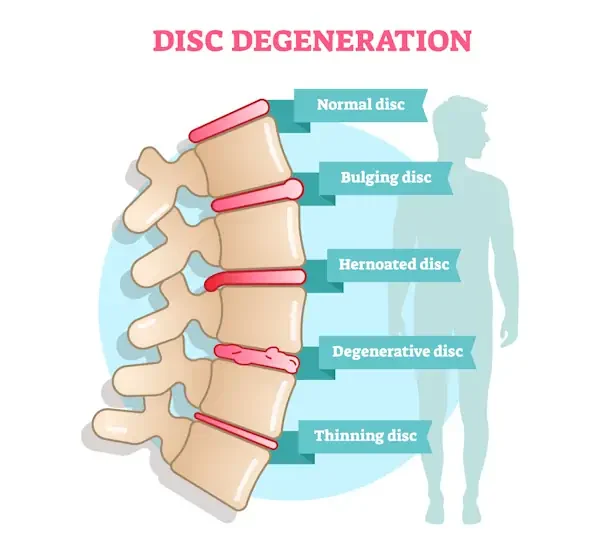
The difference between a bulging disc and a herniated disc claim is based on the medical diagnosis, not the legal process. Details such as the type of accident and the severity of the injury help determine the claim type.
Bulging Disc | Herniated Disc |
|---|---|
The disc extends outward beyond its normal boundary, but the outer layer remains intact | The disc’s outer layer tears or ruptures, allowing the inner gel-like material to protrude |
Usually considered less severe structurally | Generally considered a more significant injury, especially if it compresses a nerve |
May not cause symptoms, but it may also cause sciatic nerve pain. | More likely to cause pain, numbness, tingling, or weakness. |

How Much Compensation for a Herniated or Bulging Disc Payout?
How much compensation you receive for a herniated disc or bulging disc compensation payout depends on the level of permanent disability and how much it changes your life. in Australia, settlement calculations consider both economic and non-economic damages, including:
- Past and future lost income
- Hospital and medical costs
- Rehabilitation costs
- Pain and suffering compensation (lost quality of life)
- Travel and out-of-pocket expenses
- Cost of home care and home modifications
Payout amounts also depend on:
- The number and severity of injuries
- Your age and salary
- How long you are off work
- How long it takes to reach maximum medical improvement
- Whether you need to commence court proceedings to recover damages
Compensation Amounts Are Based on Injury Severity
In some Australian states, the average payout for a bulging disc claim is $61,158. However, settlement amounts vary widely based on individual circumstances.
- For minor back injuries like muscle sprains or strains, compensation typically ranges from $21,000 to $35,000.
- Moderate injuries that have ongoing pain and medical treatment can range from $30,000 to $100,000.
- Severe injuries that need surgery (such as spinal cord damage, multiple disc injuries or nerve compression) can result in substantial compensation, from $150,000 to $500,000 or more.
Negligence claims generally yield higher payouts than statutory claims, such as workers’ compensation, because they consider a wider range of damages.
Common Disc Injuries That Qualify for Compensation
Workers’ compensation claims can arise from any work-related neck or disc injury that prevents you from working. In Australia, common causes of spinal injuries like bulging and herniated discs include:
- Traumatic injury from slips and falls
- Improper and heavy lifting
- Poor posture
- Repetitive motions
- Crushing injuries
- Falls from a height
Slipped disc compensation claim
- A slipped disc occurs when the spine’s inner material shifts out of its usual location
- A slipped disc injury is sometimes confused with a bulging or herniated condition
- Regardless of their name, they can all qualify for workers’ compensation
Herniated disc workers' compensation
- While herniated disc injuries, also known as ruptured discs, can occur anywhere at any point in the spinal column, the lower back is a common site
- Many herniated discs start as bulging discs before rupturing
- Any spinal cord damage can severely limit your ability to work for an extended period and your capacity to perform daily activities
Bulging disc workers' compensation
A bulging disc happens when the disc pushes beyond its normal limits without breaking. This can press on nearby spinal nerves, causing significant pain, numbness, and weakness.
- This back injury can stem from a single traumatic incident or result from long-term wear and tear, making you eligible for herniated disc compensation.
- Untreated bulging discs can cause significant problems, so please seek medical help as soon as possible.
- Physiotherapy can help manage pain from bulging discs.
- Over-the-counter medications can also help alleviate bulging disc pain.
Annular tear compensation
- Annular tears can rip or fracture the disc’s hard outer layer, causing localised neck or back pain and other cord issues.
- In severe cases, surgery follows rest and activity adjustment, similar to most disc injuries.
Prolapsed disc compensation
A prolapsed disc, like a herniated disc injury, occurs when the inner substance of the disc sticks out through the outer layer but doesn’t rupture. It can also create pressure on the spinal nerve column.
Degenerative disc disease claim
Spinal discs can wear down over time, losing their shape and capacity to protect from pain. These conditions can cause neck or back pain and make it harder to move and do work duties, which may qualify you for workers’ compensation benefits.
Disc Injury Workers' Compensation Claim Process
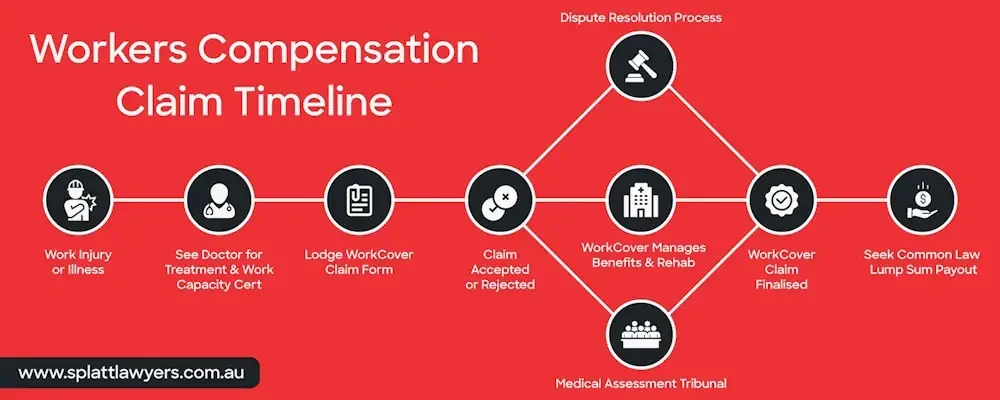
You can start a QLD workers’ compensation claim by lodging a work injury claim form through the WorkCover claim portal. But the claims process can be complex, as WorkCover typically seeks to minimise its liability
To improve your chance of a successful claim, we recommend you immediately report your injury to your employer and keep accurate records.
Lodging a Disc Injury Claim
- After you notify your employer, you start a workers’ compensation claim by completing a work injury claim form.
- After WorkCover accepts your claim, you should speak with a work injury lawyer to understand your right to a lump-sum settlement for employer negligence.
Negotiating with WorkCover and Insurers
WorkCover and other insurers regularly seek to minimise or reject claims, particularly for:
- Pre-existing medical conditions
- Non-work-related accidents
However, you are entitled to challenge a denied claim. In this case, you should speak with an experienced personal injury lawyer to determine where you stand.

Strict Time Limits for Lodging Bulging Disc Claims
An injured person must lodge a bulging disc claim within the legislated time limits to remain eligible for compensation.
- In Australia, you must lodge a personal injury claim within three years of the injury date.
- For QLD work-related injuries, lodge claims with WorkCover within six months of the incident.
High-Risk Occupations for Bulging Disc Injuries
Some occupations carry a higher risk of back injuries because of job demands and physical activity. These include:
- Warehouse employees
- Hospital and nursing staff
- Professional truck drivers
- Farm workers
- Mining and construction workers
- Manual labourers
- Car mechanics
- Gym staff and PTs
These jobs involve heavy lifting, repetitive motions, and prolonged sitting, all of which can contribute to spinal injuries.
Steps to Take After a Bulging Disc Injury at Work
Prompt action after a bulging disc injury at work is critical to your health and to building a strong compensation claim.
Seek medical advice immediately
- First, seek medical treatment and get a Certificate of Capacity from your doctor.
- Medical advice will also establish the extent of your back injury and begin the recovery process.
- Whether a motor vehicle accident or a workplace incident caused the injury, medical documentation is essential for all personal injury claims.
Report the accident
- Reporting the accident starts the workers’ compensation process because your employer must notify WorkCover.
- A detailed account of how the injury occurred will support your personal injury claim. This includes a description of the incident, symptoms, and any immediate medical treatment received.
Document everything
Complete documentation creates a strong workers’ compensation claim, including:
- Medical records and reports
- Copies of communication with your employer
- Records or emails, letters and phone calls
- Witness statements
Please keep detailed records of all medical expenses and treatments to substantiate the severity and extent of your injury. All of the above shows how severe injuries affect your work and daily life.
Get legal advice from personal injury lawyers
When you have a slipped disc, bulging or herniated disc symptom, or any other spinal disc injury caused by the negligence of others, you can seek legal advice regarding your rights. Personal injury lawyers know the laws relating to workers’ compensation claims and your right to common law and permanent impairment payouts.
Our personal injury lawyers provide a free initial consultation and 100% no-win, no-fee legal representation.

QLD Workers' Compensation Lawyers for Bulging Disc Injuries
The chronic pain of a slipped, bulging, or herniated disc injury from a work accident can cause a significant financial loss. This is particularly true when it exacerbates a pre-existing spinal column condition. In fact, any disc protrusion or degenerative condition will likely prevent you from working.
Our personal injury lawyers can advise workers harmed by employer negligence, including court proceedings.
As a valued client, you can access our 100% no-win, no-fee funding. Pay when you win and zero if you lose. For a free case review: Call 1800 700 125

Disc Injury Compensation Payouts FAQs
Is degenerative disc disease considered a disability in Australia?
According to LexMedicus, degenerative disc disease may be considered a disability in Australia when it causes a permanent impairment. You could then access government financial support.
For spinal injuries sustained on the job, you can claim workers’ compensation benefits.
How long will I be off work for a bulging disc?
You could go back to work within 4 to 6 weeks for a mild bulging disc injury, but severe injuries could take several months.
For most people, back pain associated with a herniated disc injury will pass within four to eight weeks. However, it can take up to six months for others to return to work.
What should I do immediately after a bulging disc injury at work?
If you suffer a bulging disc injury at work, stop all physical activity and notify your employer immediately to protect your health and any subsequent workers’ comp claim.
How do I prove my bulging disc injury is work-related?
- You can prove a bulging disc is work-related by linking your job duties or a specific work-related incident to your spinal injury, supported by solid medical evidence and workplace documents.
- These steps matter especially for bulging or herniated disc compensation claims because insurance companies are more likely to challenge them.
What are the time limits for filing a bulging disc compensation claim?
In Australia, you must file a bulging disc compensation claim within three years of the injury date, with different timelines for work-related injuries and motor vehicle accidents.
Lodge your claim by this deadline to ensure you can seek compensation.
Is a herniated disc a serious injury?
- Although most patients eventually recover from a herniated disc over time, it can still be a serious injury
- Sometimes it doesn’t heal completely, but it may shrink and cause less pain
- In rare instances, patients need surgical intervention to prevent permanent impairment