
Guide to Personal Injury Claims Contents Table
Personal Injury Claims: How Do They Work?
A successful personal injury claim requires the negligent party to pay damages to the injured person, a process that can be complex and has multiple pitfalls.
If you’ve sustained physical or psychological harm in an accident due to someone else’s actions or inaction, you may be entitled to seek compensation. Our comprehensive guide to personal injury claims explains the following:
- The personal injury claim process
- The workings of a personal injury action and settlements
- Common questions about compensation claims
- And what you must prove to successfully claim accident compensation
- How personal injury lawyers can help
Free Consultation
The private solicitors at Splatt Lawyers offer a free consultation that can explain your legal rights on a 100% no-win, no-fee basis. Pay when you win and zero if you lose. It’s free to know your options and if you have a valid claim. Call 1800 700 125
What is a Personal Injury Claim?
A personal injury claim is a legal action for damages in which the injured person seeks compensation for physical or psychological injuries caused by another person or party’s wrongful or negligent actions.
What is Negligence in Personal Injury Cases?
A person is negligent in a personal injury case if they do not exercise the degree of care that a reasonable person would take in a similar situation to ensure the safety of others. For example, there are many types of negligence actions for a motor vehicle accident, including:
- Using a mobile phone while driving
- Disobeying QLD traffic laws
- Dangerous or reckless driving
- Driving under the influence of alcohol or other substances
What Must You Prove for a Personal Injury Case?
To have a successful outcome in a personal injury case, you must show that the claimant, or plaintiff, suffered a foreseeable injury due to someone else’s negligence. There are four elements of a personal injury claim, including:
- Duty: the legal obligation owed to the injured party
- Breach of duty: the defendant owed a duty, and they failed to meet the standard of reasonable care (they were at fault)
- Causation: the duty breach caused your injuries
- Damages: The duty failure was to blame for the plaintiff’s loss. When this is shown, they can claim common law damages for: lost wages and superannuation, medical expenses, cost of home care, and non-economic damages like pain and suffering and emotional distress
Can I Make a Claim?
In Australia, you could be eligible to make a personal injury claim when you have physical or psychological injuries caused by someone else’s negligence, and you suffer a financial loss. There is a general three-year limitation period to start court proceedings to receive a compensation payout, although different laws apply in each state.
Free Case Review
Splatt Lawyers provides free legal advice for negligence claims, including your eligibility. All our legal services are 100% no-win, no-fee. Pay when you win and zero if you lose. It’s free to know where you stand. Call 1800 700 125
Personal Injuries that Qualify for Accident Compensation Claims
Personal injury can relate to physical or psychological harm, injury or illness and covers different types of accidents that result in monetary compensation, the most common ones being:
Motor Vehicle Accident Claims
There are frequent injuries from motor vehicle accidents on Queensland roads. You could suffer physical harm accompanied by mental trauma when a swift and violent force impacts you in a:
Common motor vehicle accident injuries include the following:
- Whiplash injuries
- Head trauma
- Serious burns
- Spinal cord injury
- Bone fractures
- Loss of limb
- Mobility impairment
Work-Related Accidents
Workers’ compensation is available to employees and subcontractors who’ve been in an accident or sustained an injury at work, whether they’re at fault or not. People injured at work in Queensland could have the right to seek restitution for economic loss, including if they are harmed:
- In an accident on the way to or from work
- During work-related travel or activities
- Due to employer negligence
When approved, WorkCover typically funds workers’ compensation payments. In Queensland, physical or psychological work injuries are frequently the result of:
- Workplace psychiatric illness
- Work stress and anxiety
- Workplace bullying and harassment
- Occupationally acquired diseases (like lung cancer)
- Falling from a height
- Other slips and trips
- Work-related vehicle accidents
- A moving object strikes you
Workers comp statutory benefits include regular payments for medical treatment, rehabilitation, and income support during recovery, often available regardless of fault for an initial period.
Public Liability Claims
You could be eligible to make a public liability claim when injured in a public place in diverse and varied situations. Owners and operators of public spaces have a general duty to take reasonable steps to keep you safe. They typically have public liability insurance to protect them financially if something goes wrong, including:
- Slipping and falling in a public space
- Injury on a council footpath
- Injury on private property (or rental property)
- A sporting or recreational accident
- An animal attack injury
- A faulty product injury
Medical Negligence
You could be eligible to make a medical negligence claim when doctors, hospitals, surgeons, GPs, and other medical specialists fail to provide sufficient medical treatment or care.
Negligent medical treatment typically includes misdiagnosis, defective implants, birth injuries, prescription errors, and delayed diagnosis.
(Splatt Lawyers does not provide legal advice for medical negligence cases)
Claims for Serious Injuries
Compensation for serious injuries covers a wide range of physical and psychological harms, including those that result in disability or permanent impairment. The Personal Injuries Proceedings Act 2002 (Qld), the Motor Accident Insurance Act 1994, and the Queensland workers’ compensation scheme generally govern these claims. Catastrophic injuries can include conditions such as:
- Fatal accidents
- Brain damage
- Spinal cord injuries
- Severe burns
- Major psychiatric disorders
- Eyesight injuries
- Head and neck injuries

How to Make a Personal Injury Claim
A successful personal injury claim relies on evidence. To make a claim, you must first:
- Show that the negligence of the other party caused your injury
- Prove your injury caused you a related loss (and how much loss)
To do this, you will need evidence to support your claim, including:
- Medical reports and expert assessments
- Photos and video of the accident scene
- Statements from witnesses
- Law enforcement reports or internal work reports
Compensation for Personal Injury Legal Services
Splatt Lawyers offers a free case review that can explain your legal rights and entitlements, including what you must prove for a successful outcome. It’s free to know your legal options. Call 1800 860 777 or email us

How Much Compensation for a Personal Injury Claim Payout?
Personal injuries can cause financial hardship through time off work and the cost of medical treatment. Furthermore, every personal injury compensation claim is different, and so is its payout value.
The extent and seriousness of physical or psychological harm will depend on your individual circumstances, including how much they affect your life. How much compensation you receive in a personal injury settlement depends on:
- The severity of injuries
- Your previous health and your age
- Your current occupation and salary
- The amount of time you were absent from work.
- How much your injuries have impacted your work capacity
Other Accident Compensation Factors
Personal injury compensation claim values vary when:
- Injuries are significant
- A longer recovery time with more time off work
- You have a higher average income
- These factors increase the size of financial loss, which is critical when deciding the value of a compensation claim.
- Many jurisdictions have a ‘threshold’ for receiving lump sums for pain and suffering, meaning your injury must be assessed as sufficiently serious. (this does not apply in Queensland)
- Non-Economic Loss compensation covers intangible losses such as physical pain, emotional anguish, and loss of enjoyment of life.
- Lump sum payments can be made for more serious injuries to cover permanent impairment, future loss of income, and pain and suffering.

What is Included in Personal Injury Settlements?
The primary goal of compensatory damages in personal injury settlements is to put the injured party back in their position if they had not suffered an injury. When calculating the monetary value of a successful claim payout, several “heads of damages” are considered, making up the total value of personal injury settlements. These factors include both economic and non-economic losses, such as:
- Lost wages due to time away from work.
- Medical treatment expenses, hospital and rehabilitation costs.
- Your travel-related medical expenses
- Home care costs
- Future lost income
- Compensation for pain and suffering
Generally, the purpose of a personal injury settlement is to cover the costs incurred from sustained injuries, with adjustments based on specific circumstances.
Future losses and compensation for pain and suffering are usually considered for severe injuries.

How Long is a Personal Injury Settlement?
Most personal injury cases typically settle between nine months and several years. How long it takes to receive compensation depends on a few factors, including:
- Accident type: motor vehicle injury claims generally settle within six months, while workers’ compensation cases can take up to a year. More complex claims can take 2 or 3 years.
- Establishing legal liability: proving who was liable for your harm and linking their action or inaction to your mental or physical condition.
- Severity of harm: claims for personal injury cannot proceed until injuries are stabilised. Catastrophic damage will take longer to reach this stage.
- The court system: Court proceedings are costly and also considerably lengthen the settlement process, which is why most personal injury claims are resolved through mediation.
What is a Structured Settlement?
Once a settlement agreement is signed, you can receive compensation as either a lump sum payment or periodic payments, called a structured settlement.
Sometimes, a structured settlement includes a lump sum component followed by regular payments.
Strict Time Limits for Accident Compensation Claims
Strict time limits apply to personal injury compensation claims in Queensland. In most cases, you must commence legal action within three years of the accident date. This period can be extended in some situations. Other conditions apply if the injured party was under 18 at the time of the incident.
- Generally, three years from the date the accident, illness or injury happened.
- For car accidents, you have:
• Nine months from the date of the incident
• Or one month from the date of consulting a personal injury solicitor about a case. - Applications for workers’ compensation claims also have a limitation period of six months, and for three years for common law claims
What is the Personal Injury Claims Process?
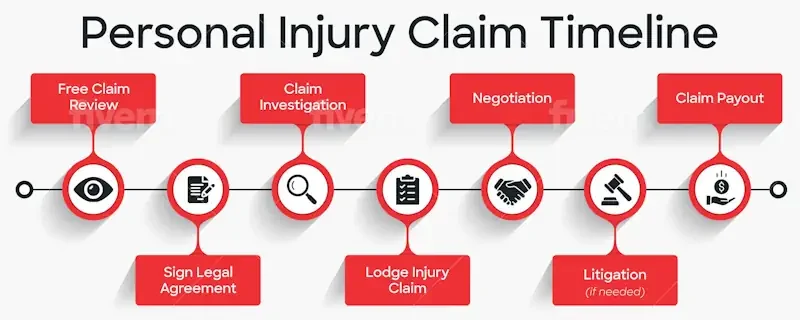
The personal injury claims process is complex and time-consuming, although the steps below may make it seem deceptively simple. The steps to being awarded damages compensation in Queensland are as follows:
- Notify the other party
- Gathering information and evidence
- Seek legal advice
- Create a legal claim strategy
- File a damages claim
- Assessment of damages
- Negotiating a settlement
- Going to court (if necessary)
- Receive a lump-sum personal injury claim settlement
Notify the Other Party
You must notify the person who caused your injury of your intention to make a claim.
Gathering Information and Evidence
First, gather all relevant information and seek medical attention after reporting the accident. This data helps prove how the injury occurred, and includes the following:
- Accident details
- Medical records and assessments
- Expert testimony
- Eyewitness statements
- Contact details
- Police reports
- Accident scene photographs, videos and CCTV footage
- It’s advisable to keep thorough records of your injuries and any related expenses to support your claim.
- A medical certificate is crucial evidence for your claim in accident compensation cases.
Seek Legal Advice
You have the right to seek legal advice from a personal injury law firm if you have suffered physical or psychological harm due to the negligence of another party.
Filing a Damages Claim
A damage claim involves preparing and submitting a legal document that outlines all the details of your case, including the parties involved, the injuries suffered, and the amount of compensation you seek.
Assessment of Damages
Queensland personal injury cases are subject to several legal regulations and requirements when assessing damages. Injury compensation seeks to restore the injured party’s life to where it would be had they not suffered harm.
Negotiating a Settlement
Settlement negotiation involves negotiating a compensation payout with the responsible party and their insurer, which will take time.
- This process starts with a compulsory conference
- If the matter is still not settled after the compulsory conference, mandatory final offers can be sought
Court Proceedings
In Queensland, most personal injury claims are settled without court action, saving costs like court filing fees. This step is the final step to a lump sum payment.
Lump Sum Compensation Settlement
Once a settlement is reached, there is a lump sum payout or periodic payments. If you are working with a no-win, no-fee agreement, legal fees and costs will be deducted from a lump sum payout.
QLD Legislation Relating to Claims for Personal Injury Compensation
The Personal Injuries Proceedings Act 2002 (PIPA) supports your right to claim compensation for a personal injury in Queensland. This legislation covers a range of compensation matters except:
- Road accident claims
- Workplace accident claims
- Injuries arising from criminal activity
- Asbestos and dust-related disease claims

Get Legal Advice from a Personal Injury Lawyer
Splatt’s personal injury lawyers can explain the legal process, including mediation and court proceedings. Splatt Lawyers can advise:
- If you have a valid claim
- Your compensation entitlements.
- The compensation claim process
- Our 100% no-win, no-fee policy
- The next steps to protect your legal rights
Splatt Lawyers provides a free first consultation to explain where you stand. Call 1800 700 125
Queensland-Wide Personal Injury Claim Lawyers

FAQs for Personal Injury Compensation Cases
How much compensation do you get for a car accident in Australia?
There is a wide variation in car accident compensation payouts in Australia. How much your receive depends on a range of factors including:
- If you were partly at fault
- Your current age and income level
- How long it takes to recover (time off work)
- The cost of medical treatment and rehab
- Your pain and suffering
- The level of permanent impairment
A compensation law firm can explain the calculations that apply to your situation during a free consultation.
How much are most personal injury settlements?
The value of personal injury settlements depends on several factors, including the type of accident. In Queensland, compensation settlements are typically confidential, yet claim information is sometimes included in governmental reports.
According to WorkSafe QLD, the average payout for a workers’ compensation common law claim from 2022 to 2023 was $188,794.
However, depending on the circumstances, compensation for severe injuries with permanent impairment, like paralysis or loss of a limb, could result in a higher payment.
How are pain and suffering calculated for QLD personal injury claims?
Personal injury claim calculations consider economic and general damages (or non-economic damages), also known as pain and suffering. These damages cover your loss of amenities, pain and suffering, and the emotional distress you have endured because of your injuries. When calculating the amount of money, these factors can be considered:
- Your age
- How long you are expected to live
- The impacts of any pre-existing conditions
- Other non-injury-related life impacts that would have emerged
- Your lost enjoyment of life
- The pain you have suffered during recovery
Under Queensland compensation legislation, an injury scale is used to calculate your pain and suffering loss, and are typically assessed using:
- QLD Workers’ Compensation and Rehabilitation Regulation 2014 (WCRR)
- QLD Civil Liability Regulation 2014 (CLR)
While the CLR is used for most injury claims, such as public liability, motor vehicle and road accidents, the WCRR is used for common law claims for work injuries.
Can you sue for personal injury in Australia?
In Australia, you can file a personal injury lawsuit if you demonstrate that another person’s negligence or wrongful actions caused the injury.
What is meant by aggravated damages?
When the defendant’s actions are so unacceptable that additional compensation is required to fairly compensate the injured party, such as when the defendant intentionally harms the other party, the court may award aggravated damages.
Do you pay tax on a personal injury claim settlement?
In Queensland, personal injury claim payouts are generally not considered taxable income. A financial consultant can explain if you are tax-exempt before receiving a settlement.
What does the personal injury commission do?
In NSW, the PIC resolves between an injured person and the liable insurer (and their employer for workers’ compensation claims).
What types of accidents are subject to personal injury claims?
Australian personal injury law allows you to claim for motor vehicle accidents, workplace injuries, medical negligence, and public liability incidents.
What is the maximum compensation for a personal injury?
There is no maximum compensation limit for common law claims in Australia.